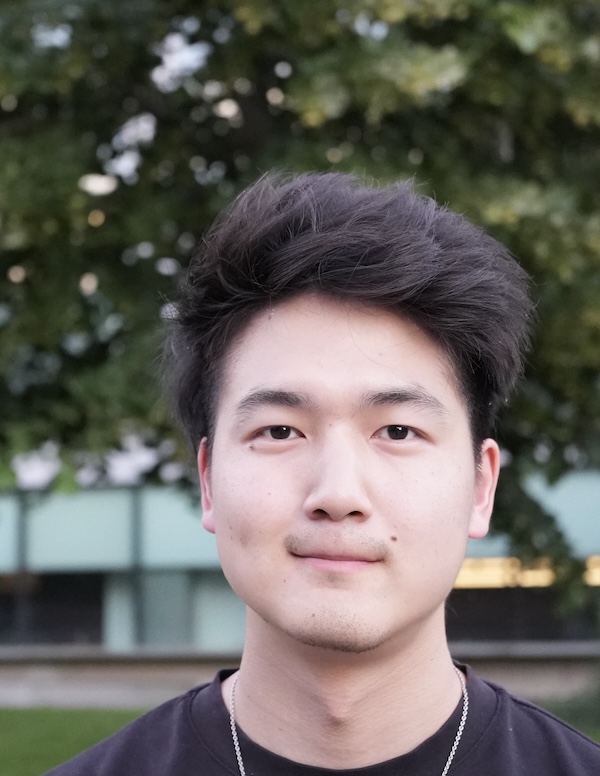
CEO at Outerport. Our mission is to accelerate the scale-up of technology from research to physical, real-world production with autonomous design engineers.
Our autonomous engineers take specifications, drawings, and constraints and turn them into design packages ready for construction and manufacturing. We focus especially on industrial automation, including control panels, systems, and process controls. Our autonomous engineers are employed at EPC firms, control system integrators, and equipment OEMs.
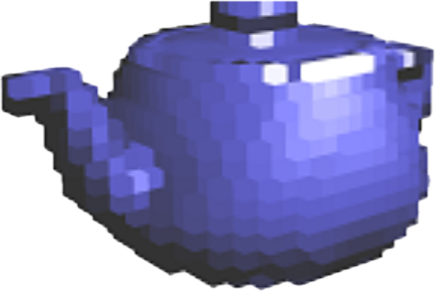
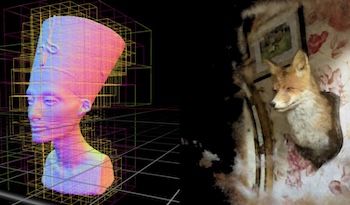
Joined NVIDIA as a Research Scientist in the Hyperscale Graphics Systems Group. We focused on fundamental research on simulation technologies, in particular how to effectively represent the geometry behind physical objects as data. Our work has been cited over 5,000 times.
Concurrently, I also did a PhD at the University of Toronto, but I went on leave to start a company. Supervised by my amazing advisors, Sanja Fidler and Alec Jacobson.
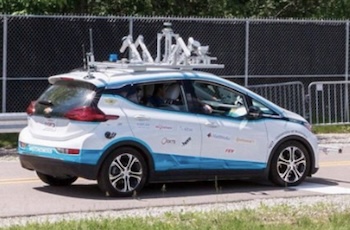
Earned a bachelor's from the University of Waterloo with a major in computer science and a lot of mechatronics courses. Converted a GM Chevrolet Bolt into an autonomous vehicle.
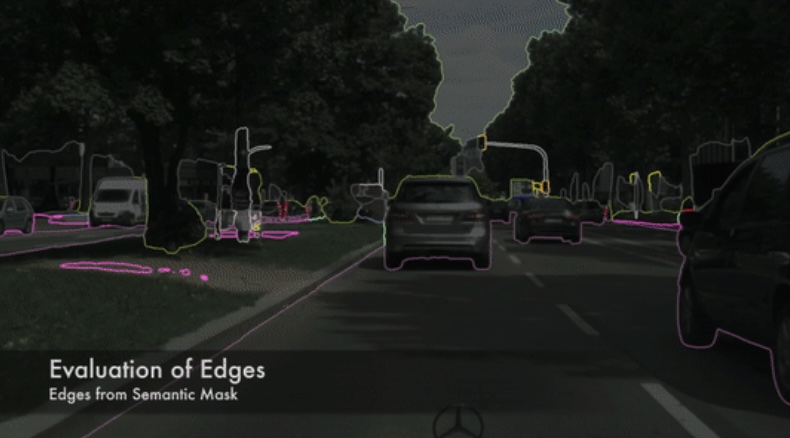
Also worked at Tulip (MES software) and NVIDIA (hardware system design for autonomous vehicles). Later did research at NVIDIA and Preferred Networks.
Started building robots — first in design, then manufacturing / fabrication, and then was the leader driving around town doing procurement, operating CNC mills, building schedules, and whatever needed to be done.
Born in Oregon, the land of semiconductor manufacturing. Growing up around Japanese technology and culture was a source of pride as an immigrant child. Influenced by biographies of Edison and Metal Gear Solid, learned the good and bad sides of technology. Learned to program and do 3D modeling. Aspired to invent technologies (especially robots) that make the world a better place.
Publications
Eurographics 2025
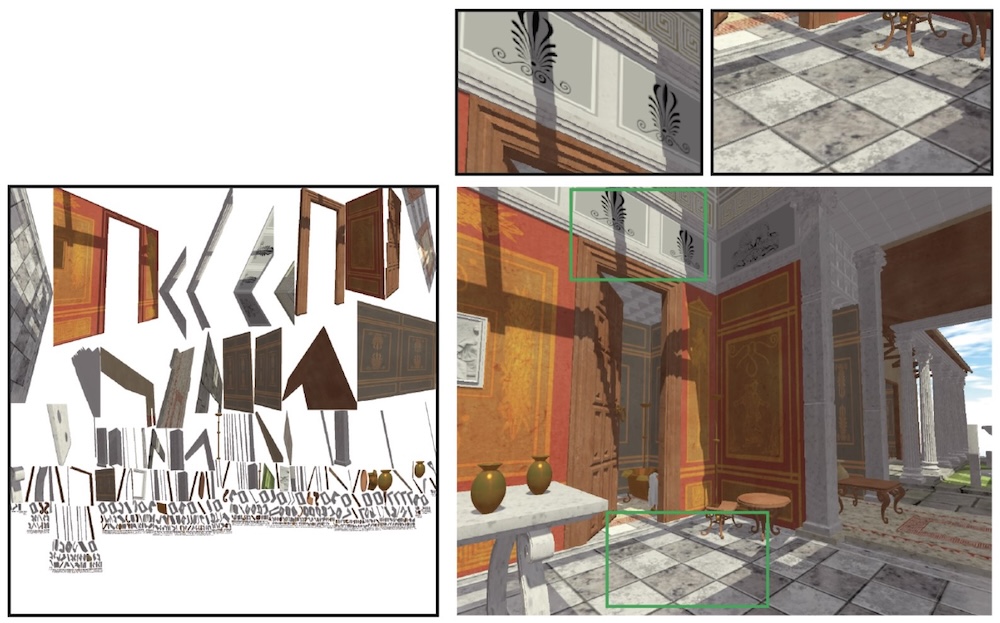
FastAtlas: Real-Time Compact Atlases for Texture Space Shading
Nicholas Vining, Zander Majercik, Floria Gu, Towaki Takikawa, Ty Trusty, Paul Lalonde, Morgan McGuire, Alla Sheffer
GPU-based atlas packing for real-time texture space rendering.
arXiv 2024
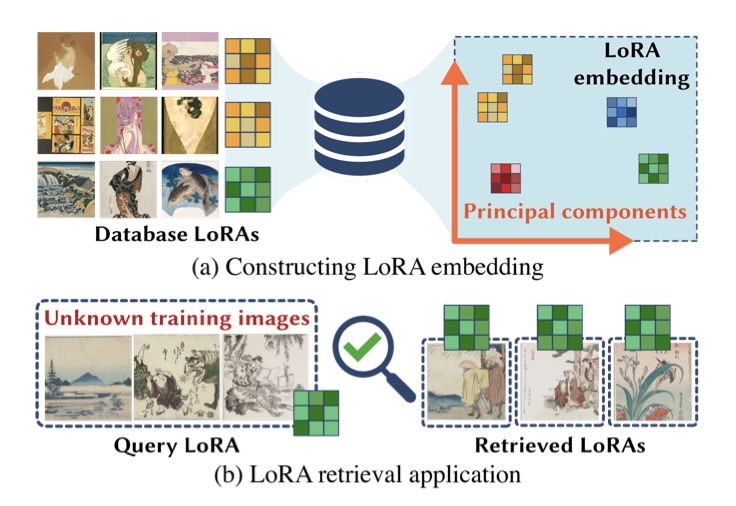
A LoRA is Worth a Thousand Pictures
Chenxi Liu, Towaki Takikawa, Alec Jacobson
LoRAs > embeddings for retrieval and clustering.
CVPR 2024
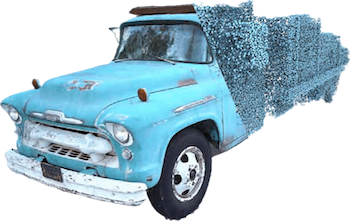
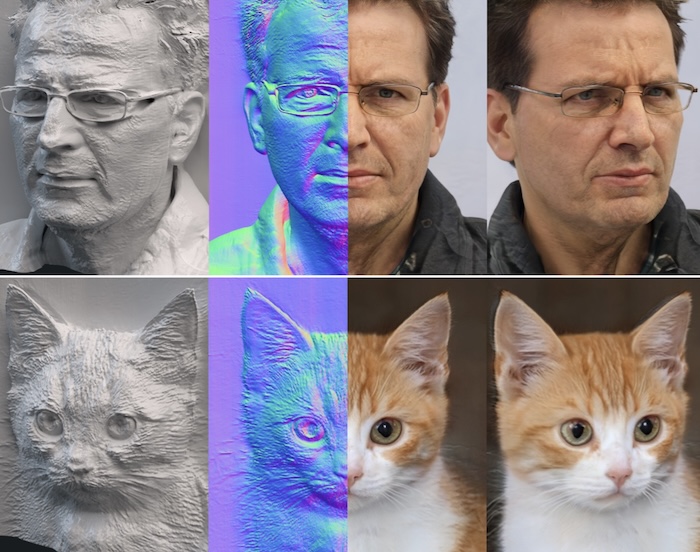
What You See is What You GAN: Rendering Every Pixel for High-Fidelity Geometry in 3D GANs
Alex Trevithick, Matthew Chan, Towaki Takikawa, Umar Iqbal, Shalini De Mello, Manmohan Chandraker, Ravi Ramamoorthi, Koki Nagano
Adaptive sampling in rendering = higher fidelity geometry.
SIGGRAPH Asia 2023
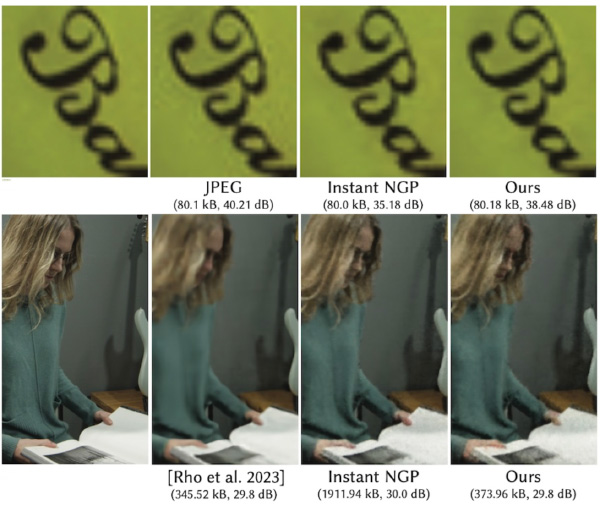
Compact Neural Graphics Primitives with Learned Hash Probing
Towaki Takikawa, Thomas Müller, Merlin Nimier-David, Alex Evans, Sanja Fidler, Alec Jacobson, Alexander Keller
Learned hash probing + hash tables = more compression & faster.
ICCV 2023
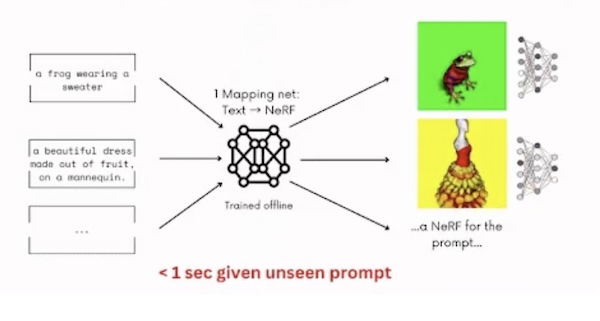
ATT3D: Amortized Text-To-3D Object Synthesis
Jonathan Lorraine, Kevin Xie, Xiaohui Zeng, Chen-Hsuan Lin, Towaki Takikawa, Nicholas Sharp, Tsung-Yi Lin, Ming-Yu Liu, Sanja Fidler, James Lucas
Optimize 3D generation over more prompts -> faster convergence.
CVPR 2023
⭐ Highlight (Top 2%)
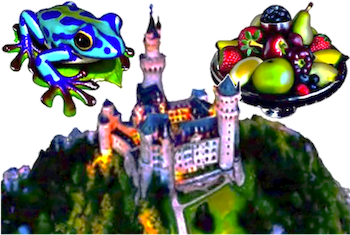
Magic3D: High-Resolution Text-to-3D Content Creation
Chen-Hsuan Lin*, Jun Gao*, Luming Tang*, Towaki Takikawa*, Xiaohui Zeng*, Xun Huang, Karsten Kreis, Sanja Fidler, Ming-Yu Liu, Tsung-Yi Lin
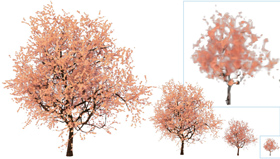
Scaling up 3D generation with smarter data structures.
SIGGRAPH North America 2022
Variable Bitrate Neural Fields
Towaki Takikawa, Alex Evans, Jonathan Tremblay, Thomas Müller, Morgan McGuire, Alec Jacobson, Sanja Fidler
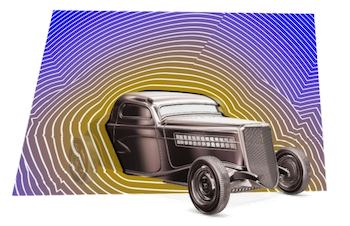
Learned indexing = more compressive than hash tables and grids.

EG / CGF 2022
Neural Fields in Visual Computing and Beyond
Yiheng Xie, Towaki Takikawa, Shunsuke Saito, Or Litany, Shiqin Yan, Numair Khan, Federico Tombari, James Tompkin, Vincent Sitzmann, Srinath Sridhar
Survey of representing vector fields with neural networks.
Tech Report 2022
RTMV: A Ray-Traced Multi-View Synthetic Dataset for Novel View Synthesis
Jonathan Tremblay, Moustafa Meshry, Alex Evans, Jan Kautz, Alexander Keller, Sameh Khamis, Charles Loop, Nathan Morrical, Thomas Müller, Koki Nagano, Towaki Takikawa, Stan Birchfield
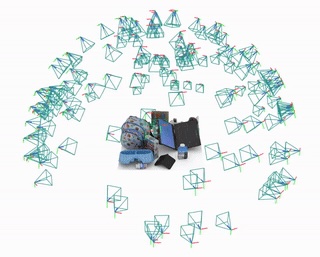
Really big dataset of synthetic multi-view images.
CVPR 2021
⭐ Oral Presentation (Top 4%)
Neural Geometric Level of Detail: Real-time Rendering with Implicit 3D Shapes
Towaki Takikawa*, Joey Litalien*, Kangxue Yin, Karsten Kreis, Charles Loop, Derek Nowrouzezahrai, Alec Jacobson, Morgan McGuire, Sanja Fidler
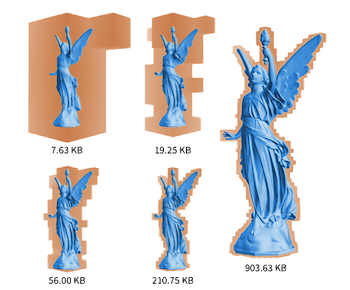
Differentiable data structures + neural fields + GPU programming = fast.
Portfolio
Fun Things
- 2 themes in my life have always been art and machines. Computer graphics is a good medium between them.
- Outside of art and machines, I enjoy basketball, soccer, football, boxing, violin, and guitar.